
CAPMAC / CARI-Gold
CARI-Gold · Gold floor healthWhere the grams went. What every machine is telling you.
CARI-Gold reads the weighings your job cards already carry and the machine records you load. For cast jobs it shows the grams not accounted for at each weighed step. For any of the fifteen machine kinds, load its records to see the result; where a possible fault is found, the page names it.
- Gram account for every cast job
- Fifteen kinds of machine, one floor page
- No new sensors, no new network
- Read-only, on your own PC
Watch the film
3 min 57 s, with captions. Sound on for the narration.

A job total hides the step. Machines drift between services.
A gold floor weighs its metal on every job card, and many of its machines keep logs. The people on the floor are busy making jewellery; no one has the hours to set those records side by side. What is missing is a reading of each step and of each machine.
Weighings stay on the job card
Charge, tree, pieces and sprues are weighed job by job, rarely set side by side, step against step.
The stock total does not show the step
Stock-taking shows the month's shortfall. It does not show which job or which step to check.
An entry slip looks like a loss
A missing or inconsistent entry sits inside the totals and is counted as gold gone.
A furnace loses heat slowly
Insulation and door seals wear between services. The controller holds the temperature, so the change stays out of sight.
A vacuum pulls a little slower
A pump or a seal can deteriorate while the caster still completes its cycles. The record of each cycle shows the change.
A bath shifts load by load
Bath condition and electrical contacts change between services. Each load looks like the last one.
Where the grams went, job by job and step by step.
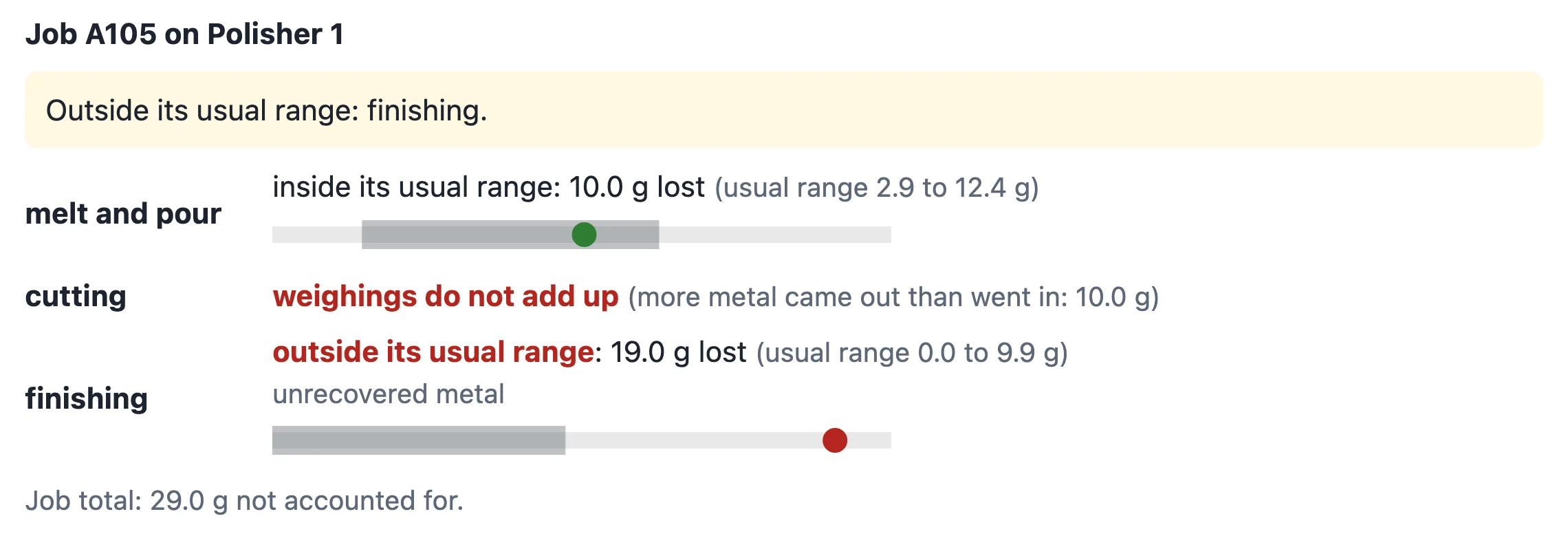
Each cast job is split into three steps: melt and pour, cutting, and finishing. For melt and pour and for finishing, the grams not accounted for are drawn against the usual range for a charge like yours. A step above its range puts a banner on the job.
Give the zinc share, the melt temperature, the atmosphere and the investment weight of a job and its usual range follows them.
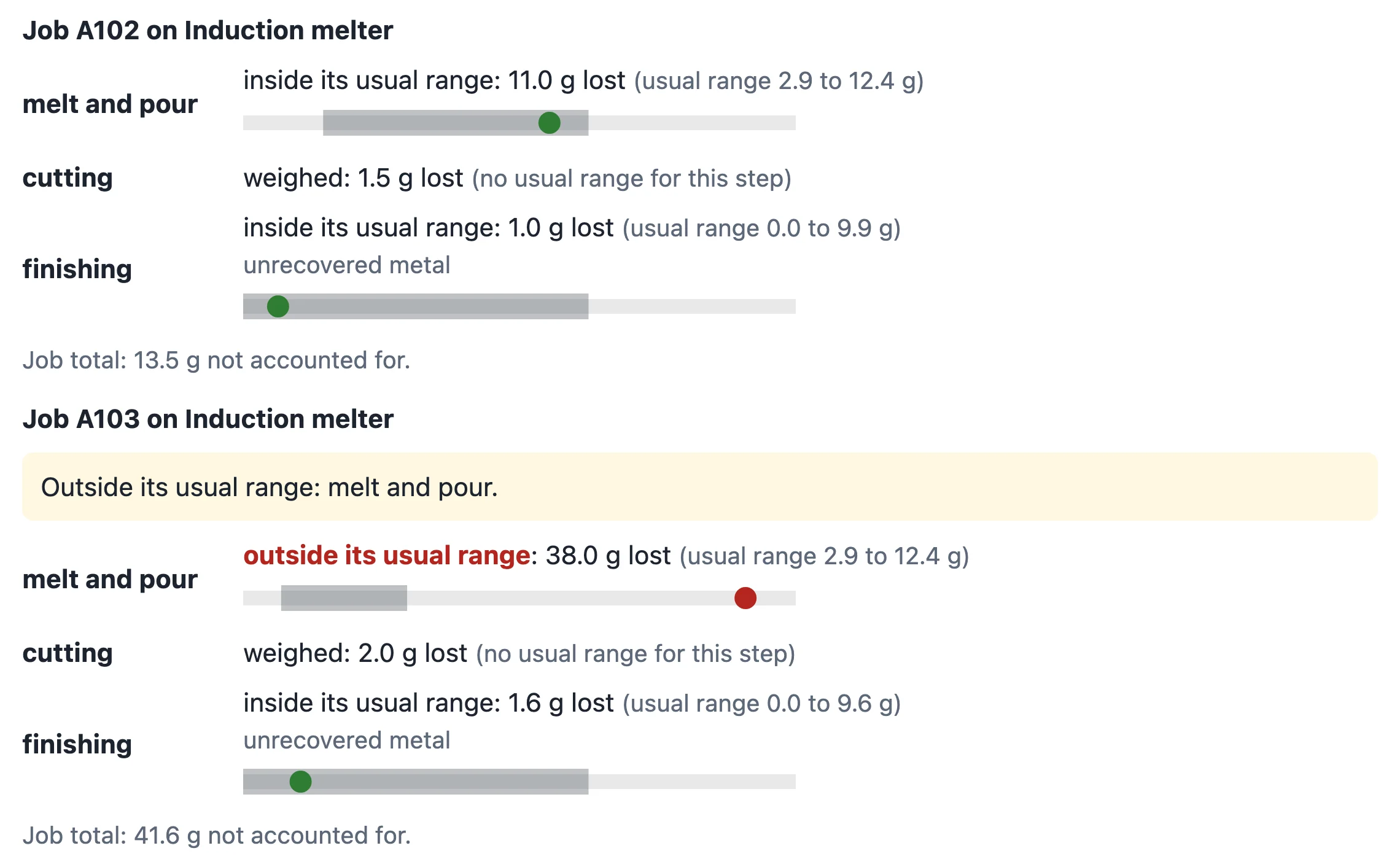

A slip in the weighing book is not a loss of gold.
Entries to check are marked separately from steps above their usual range. A weighing you did not take stays blank and is never filled in. Each month is totalled for the accounts desk, with two spreadsheet files.
Fifteen kinds of machine. One floor page.
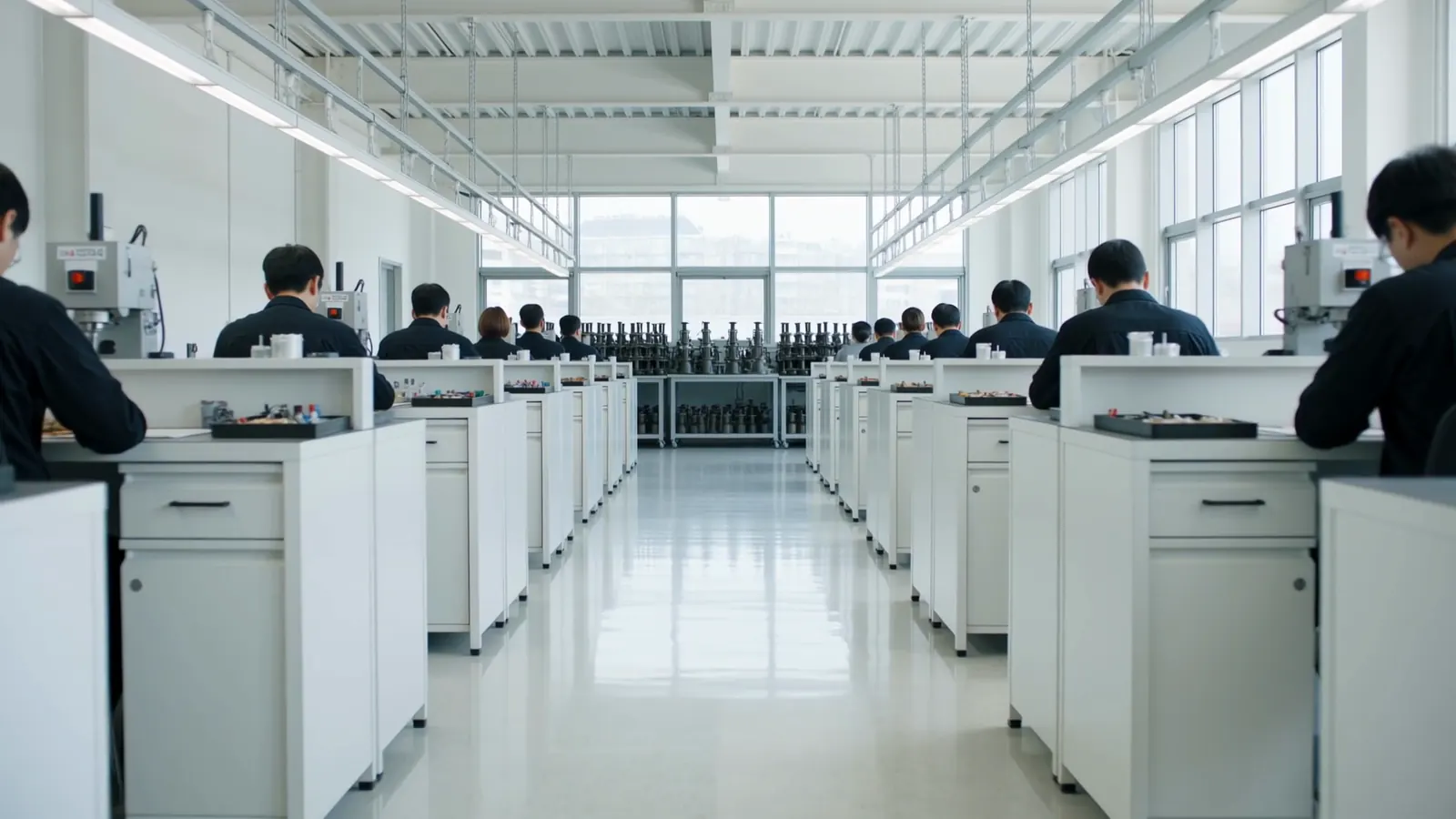
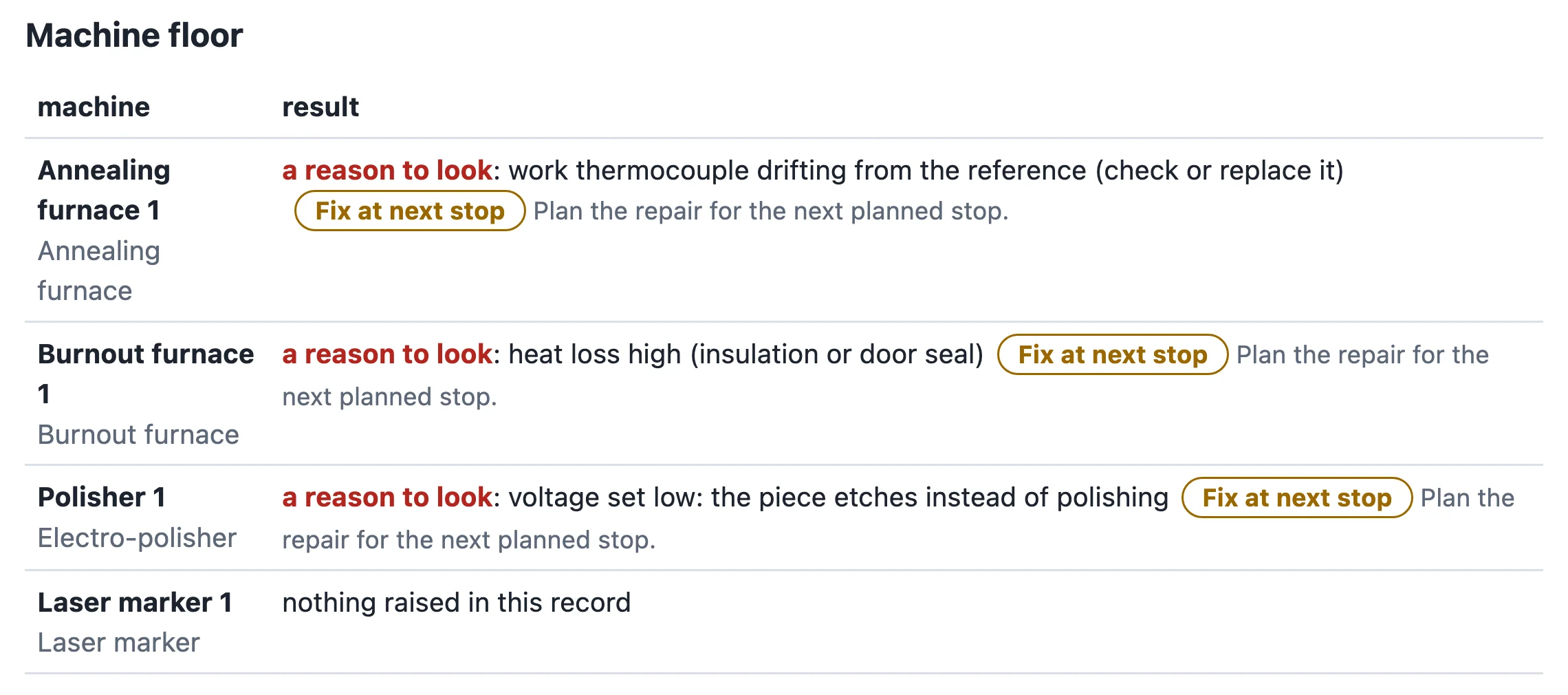
The floor page reads every machine whose records you load, from the melter to the refinery, and puts the findings in one table, in the order: named fault, change seen, could not judge, nothing raised. It serves a casting floor, a rolling line and a refinery alike. Load as many machines of each kind as you run, under the names your floor uses.
From the melt to the refinery.
Each machine is read from its own records, and each finding points to what to inspect: the holder, the bearing, the lens, the chiller. The technical annexe lists every finding with what to check.
Melting and stock
The melter and the caster that make the stock.
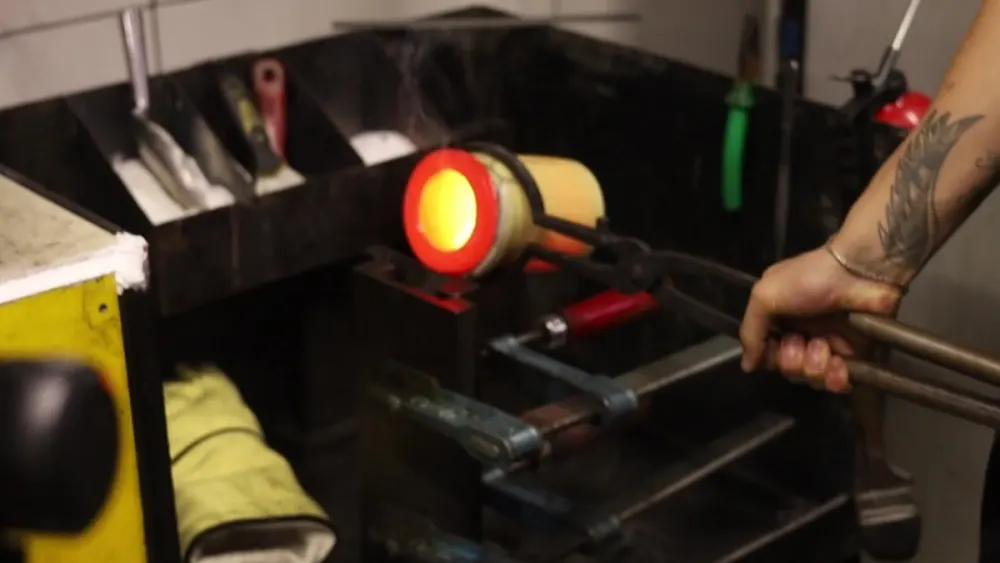
1Induction melter
The furnace that melts the charge, read heat by heat.
Lining worn, coil cooling water flow low, capacitor bank fault, melt taken hotter than its target.
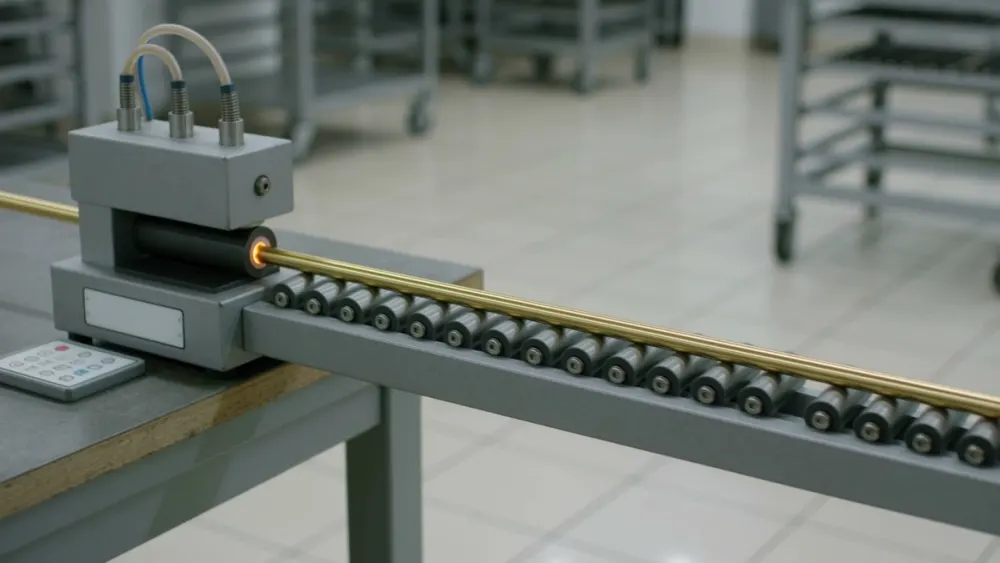
2Continuous caster
Rod, wire and strip stock withdrawn from the melt through a cooled die.
Die worn, cooling-water flow low, strand slipping in the drive, melt held hot or cold.
Investment casting
From the mixed investment to the cast tree.
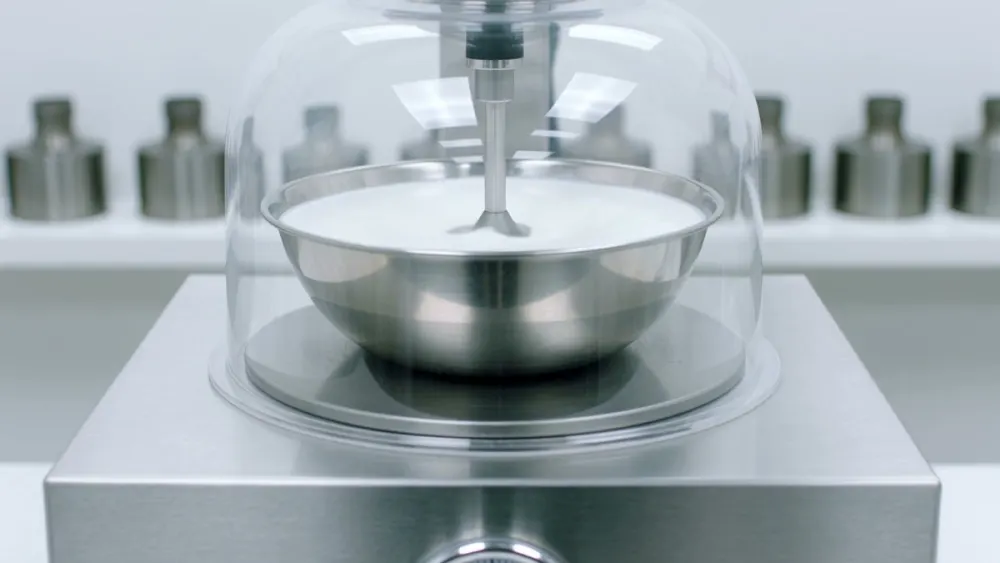
3Investment mixer
The vacuum mixer that prepares the investment for the flask.
Vacuum pump weak, vacuum leak.
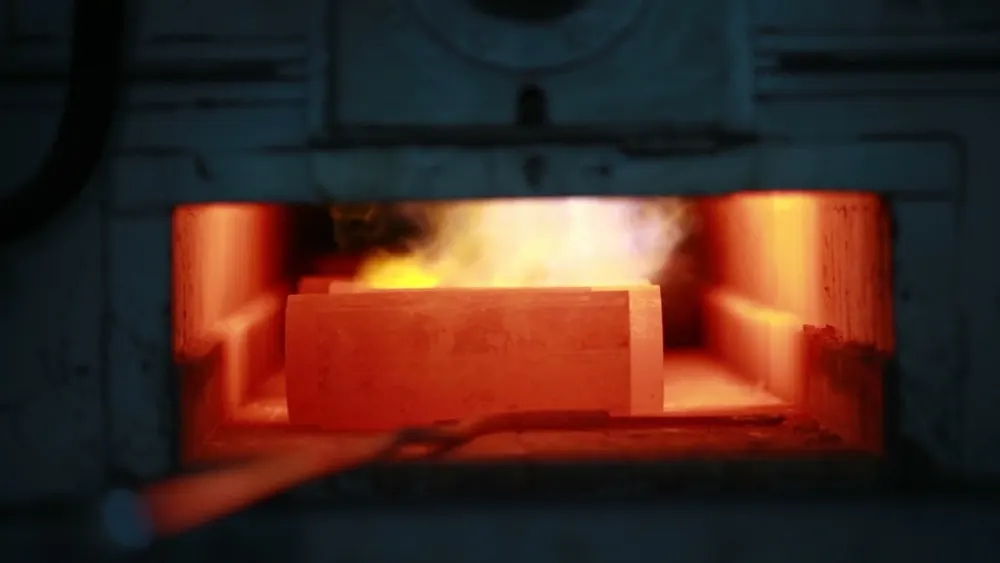
4Burnout furnace
Burns out the invested flask, read firing by firing.
Heat loss high, heating power low, thermocouple failed, firing off the approved programme.

5Vacuum caster
The casting machine itself, cycle by cycle against its recipe.
Pump slow, leak, damp flask, argon below the recipe, melt poured colder than the recipe.
Forming and heat
Strip to thickness, and the heat that softens it.
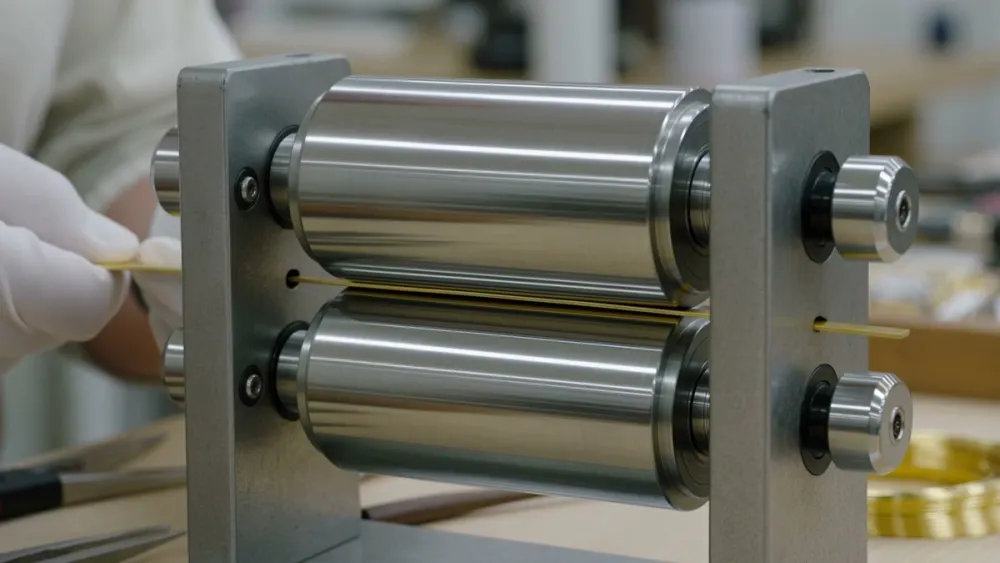
6Rolling mill
Strip and sheet rolled to thickness, pass by pass.
Roll eccentricity, stand less stiff, roll gap opened.
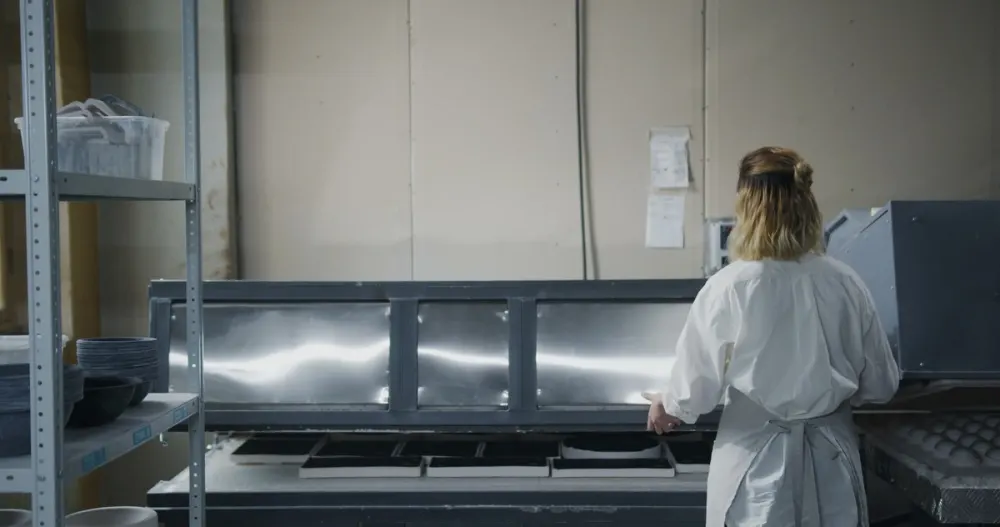
7Annealing furnace
Softens metal between passes; its temperature reading must be true.
Work thermocouple drifting from the reference.

8Enamel kiln
The kiln used for enamel firing, read from one day of its controller log.
Thermocouple failed or slow, heat lost, heating power low, heater switch stuck.
Cutting and marking
The spindle and the beam.
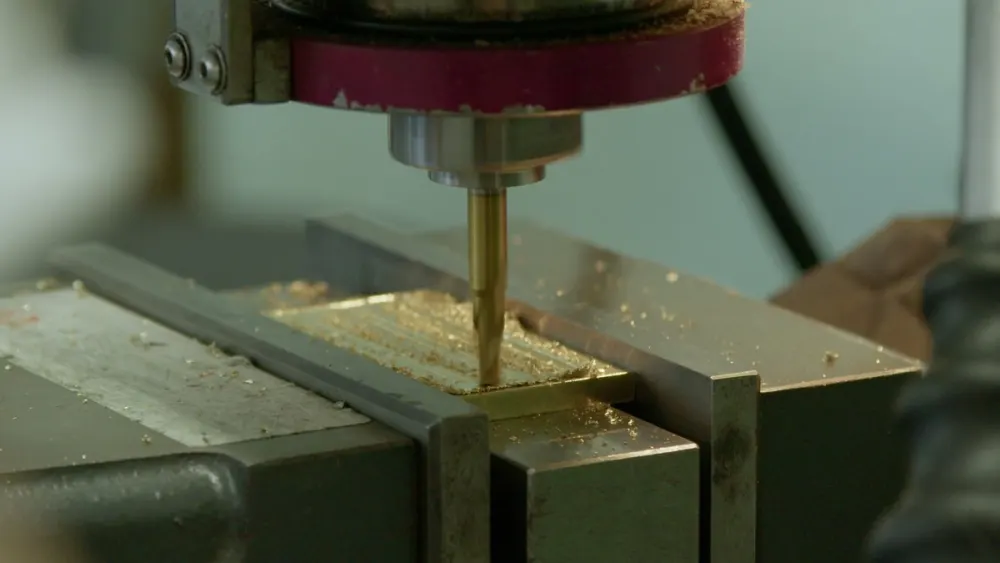
9CNC engraving
The engraving and milling centre, read from the log of each job.
Chatter, spindle bearing worn, ball-screw backlash, chipped or worn tool.
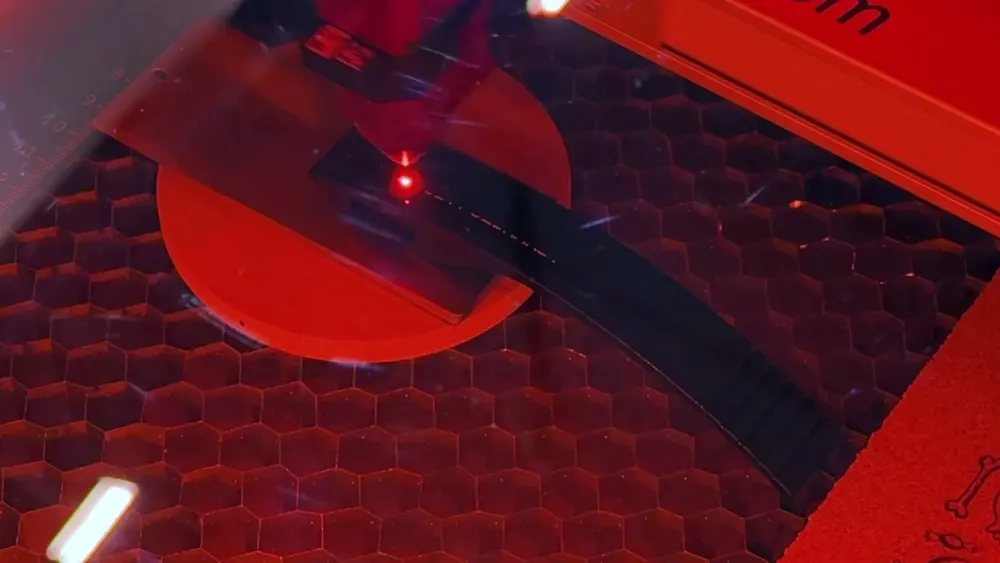
10Laser marker
Hallmarks, logos and serial marks, mark after mark.
Laser source weak, scanner drifting, defocus, window or lens dirty.

11Diamond laser cutter
The laser that saws and shapes stones, cut after cut.
Pump diodes ageing, chiller flow low, fume extraction low, optics dirty.
Finishing and plating
The shine, the finish and the plate, load after load.
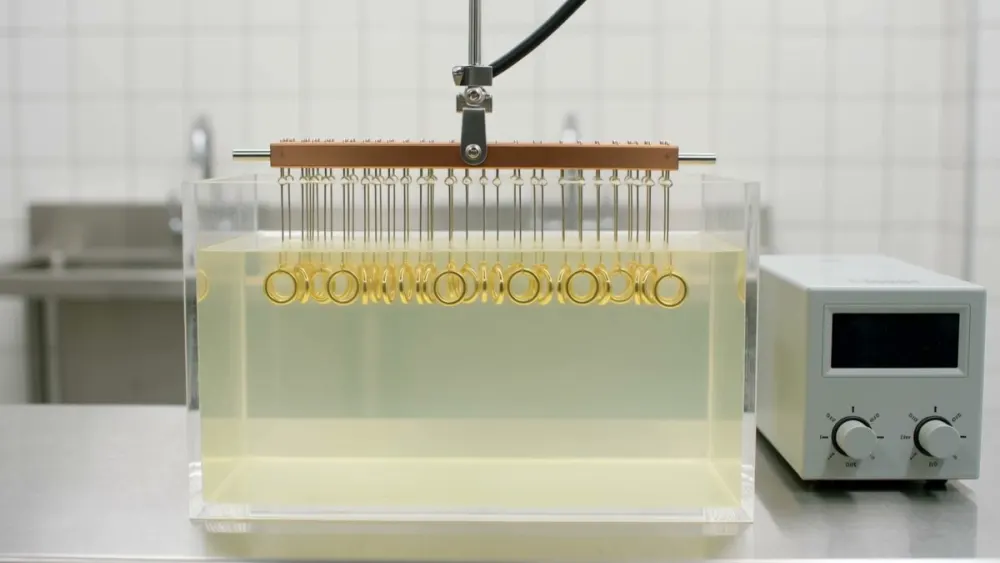
12Electro-polisher
The bath that gives the final shine, batch by batch.
Voltage set low or high, bath hotter or cold, bath metal-loaded, poor contact.
13Mass finisher
Vibratory bowl finishing, load by load.
Media worn, rinse water blocked, drive weak or set high, bowl overloaded.
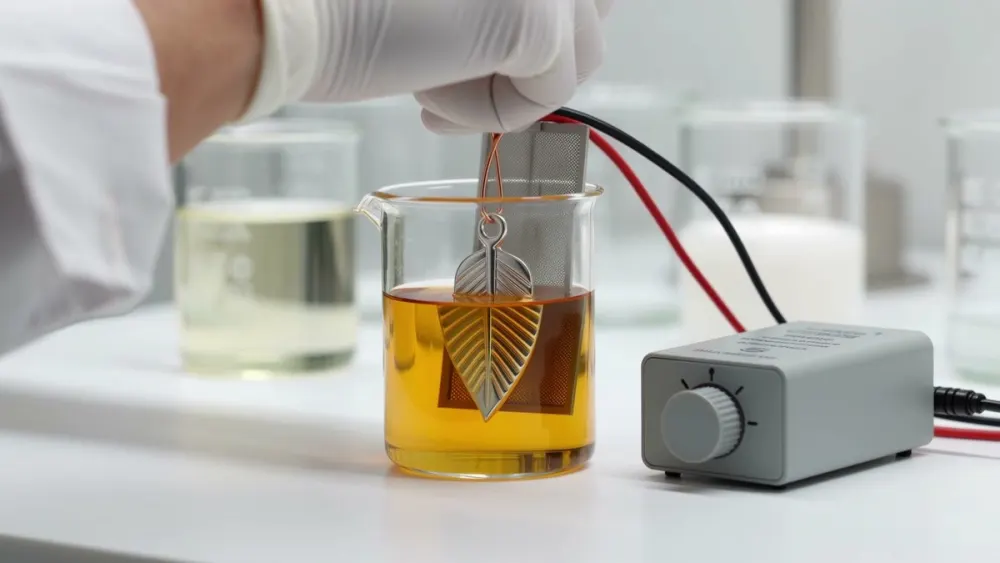
14Plating bath
Rhodium and gold plating, load after load.
Contact resistance up, anode passivation, bath hotter or colder, filter flow low, free acid high.
Refining
The refining vessel and its fume scrubber.
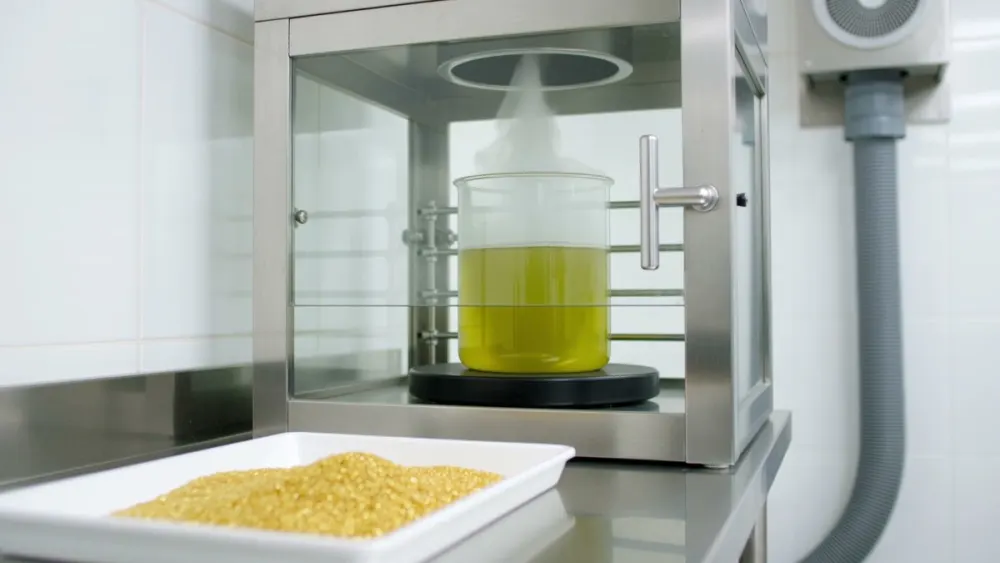
15Gold refining
Aqua regia dissolving and its fume scrubber, batch after batch.
Scrubber performance down, fan pressure low, slow dissolving, too little nitric acid, agitator current low.
Four plain answers. One of them for every machine.
Every machine you load gets exactly one answer, in the same words whatever the machine. A fault or a change also carries an urgency grade for maintenance planning; your team decides when to open the machine.
A reason to look
A possible fault is named in plain words, with where to look.
Change seen
A change from the machine's own normal is reported. No fault is named.
Could not judge
The page says what is missing or what to fix in the records.
Nothing raised
No fault or change was flagged in these records.
Where the two pages meet.
If the job card names a machine of a kind linked to the flagged step, its named fault appears beside the grams. The accounts desk sees the grams, the maintenance lead sees the machine, and both see the same sentence.
Linked to melt and pour: induction melter, vacuum caster, continuous caster, burnout furnace, investment mixer. Linked to finishing: electro-polisher, mass finisher, plating bath.


Your job cards. Your PC. Your records stay with you.
CARI-Gold works beside what you already run. It needs no connection to a machine, no change to a controller and no new hardware.
Paste the weighings
One line per job, pasted from your spreadsheet or chosen as a file.
Read the gram account
Every job, every step, with the jobs to look at flagged.
Add your machines
All together in one file, or one machine at a time from its own file.
Read the floor page
Faults named, urgency graded, and a fault shown beside a flagged job.
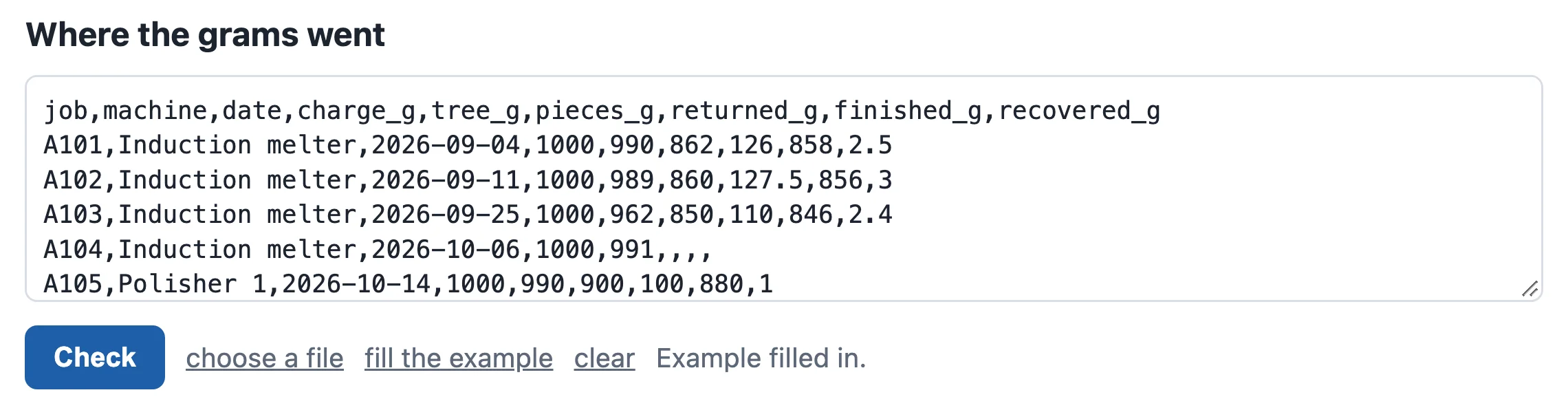
Files as they are
Spreadsheet pastes, comma, tab and semicolon files are all read. A guide per machine lists the readings each kind needs.
Read-only, on your PC
It runs on your own computer and opens in your browser. It never writes to a machine or its controller.
Plain refusals
A file that cannot be read is sent back with words that say what to fix. Results print from the browser for the floor walk and the monthly review.
Wherever gold is melted, worked or refined.
The same application serves a single workshop and a multi-line factory. The gram account applies to cast jobs; the floor page applies to any of the machine kinds you run, so a refinery or a mint uses the floor page on its own.

Jewellery workshops and factories
From casting to setting under one roof. The gram account for every cast job, and the casting, engraving, laser, finishing and plating machines on one floor page.

Casting houses
Flask after flask, for many customers. The melter, mixer, burnout furnace and caster are read cycle by cycle, and every job carries its own gram account.
Refineries
Dissolving batches and a fume scrubber that must keep working, read batch by batch, with the scrubber, the acid mix and the vessel named in the findings.
Bullion and mints
Melting, continuous casting, rolling, annealing and marking. Each loaded melter, caster, mill, furnace or marker gets its own row on the floor page.
Chain makers
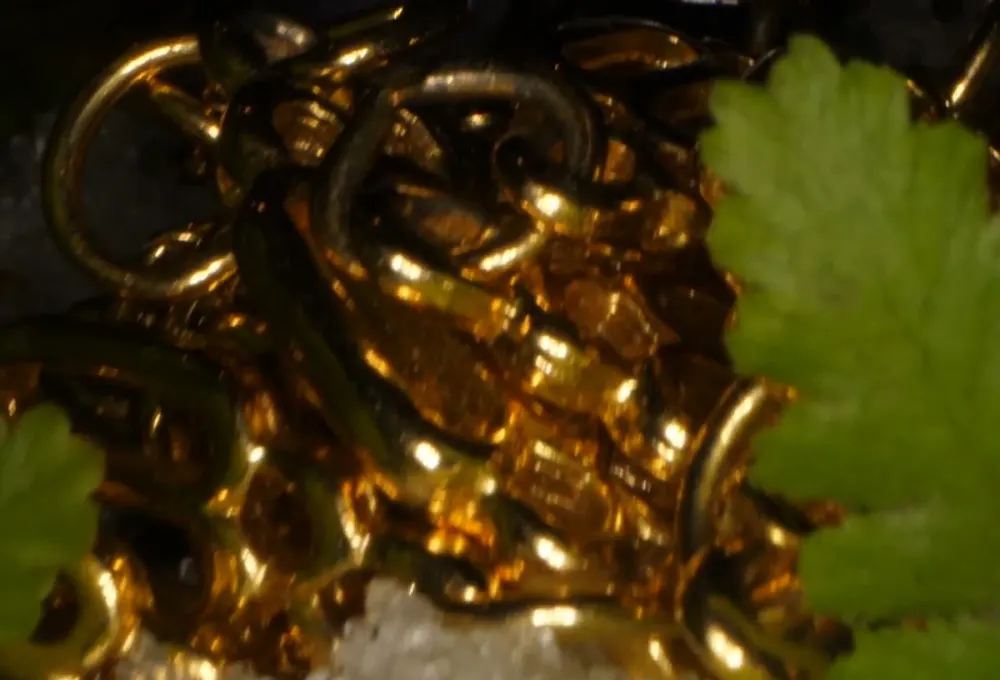
Wire and strip are only as good as the caster, the mill and the annealing furnace behind them. Those machines, and the plating and finishing lines after, each get a row.
Your alloys, your recipes
Name your machines as your floor names them and run as many of each kind as you have. Each job's usual range follows its own charge and recipe.
CARI-Gold reads the gold floor. CARI-Chiller watches the cooling plant, and CARI-Loops finds the control loops and valves that need you.
Take it to your team.
Short summary
Two pages: where the grams went, and the fifteen machines on one floor page. PDF · 2 pages · 409 KB
OpenBrochure
Fourteen pages: the gram account, the floor page, all fifteen machines, the four answers and where it works. PDF · 14 pages · 2.9 MB
OpenTechnical annexe
Machine by machine, for your engineers: the records each kind needs and every finding with what to check. PDF · 10 pages · 1.8 MB
OpenBook a walkthrough on your own PC. See your own pages.
Bring cast-job weighings, or two record sets for each machine you choose: a good run and the run to review. We set CARI-Gold up with your team on your computer and read the page for the records you bring.